How To Factory Reset Windows 10
If you find yourself in a situation where your Windows 10 computer is not performing as expected or you simply want to start fresh, a factory reset can be the solution. By following a few simple steps, you can easily restore your Windows 10 operating system to its original state.

To begin the process of factory resetting Windows 10, there are several methods you can use. One common method is through the Settings menu. Simply navigate to the "Settings" option in your Start menu and select "Update & Security." From there, choose the "Recovery" tab and click on "Get started" under the "Reset this PC" section.

Another option is to use the Advanced Startup feature. This can be accessed by holding down the Shift key while clicking on the "Restart" option in your Start menu. Once your computer restarts, select "Troubleshoot," then "Reset this PC."

If you are specifically looking for instructions on how to factory reset an HP laptop running Windows 10, there may be additional steps involved. HP laptops often have their own recovery partition that allows for easy restoration of factory settings. To access this feature, restart your HP laptop and repeatedly press the F11 key until you see the Recovery Manager screen.

It's important to note that performing a factory reset will erase all personal files and installed applications from your computer. Therefore, it's crucial to back up any important data before proceeding with this process.

In conclusion, whether you're using a standard PC or an HP laptop, resetting Windows 10 to its factory settings can help resolve issues and provide a fresh start. By following the below instructions carefully and backing up your data beforehand, you'll be able to easily perform a successful factory reset on your Windows 10 device.

Right on its operating system, Windows 10 already provides the Reset Win 10 feature. With this feature, you only need a few quick steps to bring the operating system you are using to look like new without having to install it via disk, via USB, or having to reinstall the driver.

How To Factory Reset Windows 10

Benefits Of Factory Reset Windows 10

As mentioned above, resetting Windows 10 helps the computer return to its original state when we have just finished installing Windows, all the software or applications you previously installed will be not lost and replaced by the system. Operating system and available applications.

Advantage

- Easy to do, even if you have no computer knowledge.
- No need for support tools such as USB rescue or Hiren's BootCD rescue disk.
- Fewer errors during recovery.

Why Factory Reset Windows 10?

There are many reasons why you are forced to reset the computer back to its original state instead of reinstalling Windows such as:

- The computer is faulty.
- Installing too much software makes the computer slow down.
- Due to a long time of not cleaning garbage.
- The computer is infected with a virus, or malicious code that damages system files.
- Unable to remove all tools or applications.
- The computer is infected with Adware and has many ads on when opening the browser.

How To Factory Reset Windows 10

Step 1: To reset Windows 10, first click Start and select Settings or press the Windows + I key combination to enter the Setting app. Here you click Update & Security.

How to reset windows 10 to factory settings


Step 2: In the list on the left, click Recovery, in the Reset this PC section, click Get Started

How to reboot windows 10 to factory settings


Step 3: A new window will appear. Here there will be 2 options: Keep my files and Remove everything

- Keep my files: This option deletes all applications and software you have installed on your computer but will keep the files in the user folder ( by default that folder is in the path C\Users\username).

- Remove everything: This option means that you agree to delete all applications, and software, and clean the Windows installation partition or the entire hard drive as new (only choose this if you want to reset Windows 10 back to the original).

=> Depending on your needs, you can choose 1 of 2 options, here Taimienphi will give 2 cases for you to easily implement.

windows 10 how to restore


* Case 1:  Select  Keep my files, and a notification window pops up, click Reset to start the Reset process on Windows 10.

- Note: After clicking reset, the computer will restart. You will not be able to go back to the previous steps,

how to factory reset windows 10,


- The computer starts to reboot and starts the Windows 10 reset process

- After the reset process is successful, the machine will automatically re-enter the operating system as it was.


* Case 2: Select  Remove everything, to clean Windows and return Windows operating system to a new state.

- Wait a moment for the system to launch the process.


- The next interface you select is Only the drive where Windows is installed, which means that the resetting process of Windows 10 will erase everything in the hard drive partition containing the Windows 10 operating system. Absolutely do not select All drives, because it will erase all other drives and it will be very difficult to recover data.

how to reset windows 10 to factory settings

- A new window interface appears and here there are also 2 options for you:

+ Just remove my file: This option helps you delete quickly, which means that after deleting you can still use the software. data recovery to recover, similar to the Quick Format USB option.

+ Remove files and clean the drive: Wipe data and it is very difficult for you to recover data, the downside of this option is that the deletion time will be quite long. This method is only useful in the case that after resetting the device you will sell or give it to someone else, but if you still use it, you don't need to choose this option to waste time.


A message in the next window with the content as shown below, click the Reset button to perform the process of restoring the computer to a new state. Windows will restart and take a certain amount of time depending on your computer configuration to reset the system.

how to reboot windows 10 to factory settings


The computer After the reset process, you will need to perform a few steps to reset Windows 10 before using it as with a new operating system.

The installation steps after resetting Windows 10 are as follows:

- Select language and time zone

The installation steps after resetting Windows 10


In this step you can skip and edit the time after the installation is complete, How to adjust the time in Win 10 or adjust 24h in Windows 10  is quite simple, just like how it is done on other versions of Windows.

- Click  Accept  to agree to the terms of use


- Click Use Express Setting


- Enter  Username, then click  Next  to finish

With just a few simple steps right in Windows, you can return the operating system on your computer to its default state with the Reset Windows 10 feature. You can also refer to how to activate it. 180-day license on Windows 10.

The reset of Win 10 is not always as convenient as many of you think, some of you have encountered the error of resetting Win 10 and had to reinstall Windows 10 when you couldn't find a fix, Taimienphi has summarized how to fix the error that does not reset. Win 10 in recent tips, if you are facing this situation, please refer to how to fix the Win 10 reset error here. If you are using Windows 11, please refer to this article for an effective reset.
10 Things To Know When Using Windows 10

Windows 10 is the latest Microsoft operating system that was officially commercialized last year, Windows 10 is introduced as the most powerful and multitasking operating system with features distilled from older versions as well as the latest versions. New features developed by Microsoft.

Windows 10 is an improved and added operating system from the Windows 8 operating system, which is said to be most suitable for use on mobile as well as on desktop, optimized for both normal and touch machines. You can also experience the Windows 8.1 operating system if you have never used and installed this operating system.

10 things to know when using Windows 10 will tell us about what Windows 10 can do, improved features bring convenience to users. You can also refer to the article Things to know before upgrading Windows 10 to learn more about this latest operating system. In this article, 5startpc will help you learn about this new Windows 10 operating system.

10 THINGS TO KNOW WHEN USING WINDOWS 10

1. Windows 10 allows you to use it for free for the first year before you decide whether to buy a license or not, and updating from Windows 7 or 8 is completely free.

2. In Windows 10 you can customize the "Start menu" bar to your liking, you can even drag and drop the Start menu frame freely, visit the article to customize the Start menu in Windows 10 to know more about it. this feature


3. You can pin or unpin folders or applications in the Start menu by right-clicking a folder and selecting pin to Start Menu (or unpin to Start Menu if you want to remove it).


4. Resize applications, and folders and move them to your liking by dragging and dropping the mouse.


And you can customize the size you want

5. In Windows 10 you can quickly find everything on your computer from text files, pictures, or applications. Just open the Start menu and type.


6. Creating a multi-screen "Desktop" helps you more conveniently in arranging to-do tasks by clicking on the task view icon in the left corner of the screen.


7. Flexible switching between "Desktop", creating and deleting quickly, maximum support for usability.


8. The "snap assist" feature in Windows 10 lets you see all the tabs and folders you are opening in the most intuitive way. You just need to drag a folder or any open folder to the right corner of the screen.


9. Microsoft Edge, the new browser developed specifically for Windows 10. Powerful, fast as well and high-performance, this is the replacement browser for the outdated Internet Explorer (note that in Windows 10 there is still Internet Explorer ).


10. In Windows 10 you can customize your lock screen easily, you can replace the pictures you want. To access this feature, follow the path: Setting -> Personalization -> Lock screen. The fastest way is to type Lock Screen into the search bar.


With 10 things to know when using Windows 10 to help you learn more about Windows 10, you will have a better experience with this operating system. In addition, if you want to install Windows 10 instead of updating, you can refer to the article on how to install Windows 10 with DVD and USB to experience this operating system as soon as possible.

How To Fix Sound Errors on Windows 10

How To Fix Sound Errors on Windows 10

You play a game or watch a movie on your PC but don't hear any sound coming from it. On the surface, there is no obvious reason for the loss of sound. The problem may appear after you update the operating system, due to program or software conflicts from 3rd parties. In this article, we will introduce you to some ways to check and fix audio errors on Windows 10.

Fix sound errors on Windows 10

The audio bug can be caused by 3rd party software and requires a patch. The problem can also be due to Windows 10 itself or from some hardware. The following guide starts with ways to fix the error from simple steps and goes deeper into Windows 10 if you continue to face the problem of losing sound.

How To Fix Sound Errors On Windows 10


1. Implement Basic Methods First

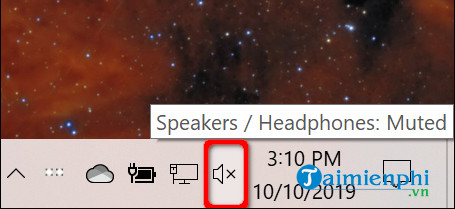
First, you need to verify that the sound is not accidentally muted on the PC. If your keyboard has a volume control, press the key or adjust the controls to see if the volume goes up and down. You can also check the speaker icon next to the system clock.

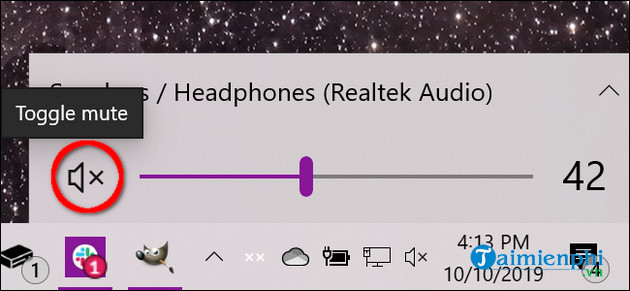
As the below screenshot shows, the speaker icon with an X means that the sound is off. Simply click on it to expand the audio panel.

fix sound errors on Windows 10

Next, click on the speaker icon to the left of the slider to open the sound.

fix sound errors on Windows 10

You should also verify that the sound is not muted at the hardware. For example, your speakers might have volume buttons, or they might accidentally be unplugged from your PC or power outlet. Similarly, your headphones or microphone might include volume controls that have been disabled or are not connected to your PC.
Another simple fix is to make sure that the problem is not related to a specific application or program installed on your computer. For example, the sound is muted on YouTube.

cach sua loi am thanh tren windows 10 3

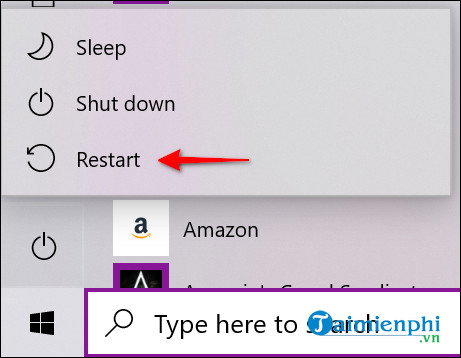
In addition, users can also try installing all Windows 10 updates or restart the computer.

fix sound errors on Windows 10


2. Check The Audio Equipment

In general, you should only have one audio device installed. However, the list piles up when you start installing external devices like HTC Vive, wireless Xbox controllers, headphones, etc.

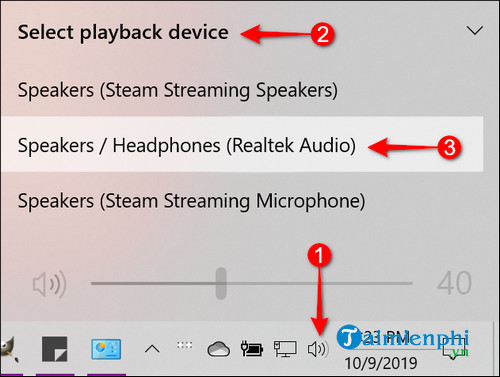
There may be situations where you switch from headphones to your laptop's existing speakers, but Windows 10 still plays audio through those disconnected headphones. You can verify the default audio device in 1 of 2 ways: from the taskbar or Control Panel.

Check the audio device from the taskbar: Click on the speaker icon located next to the system clock. You'll see 1 name listed on the volume control panel. Click on the name to open the Select Playback Device list and select a different audio device until you hear audio.

fix sound errors on Windows 10

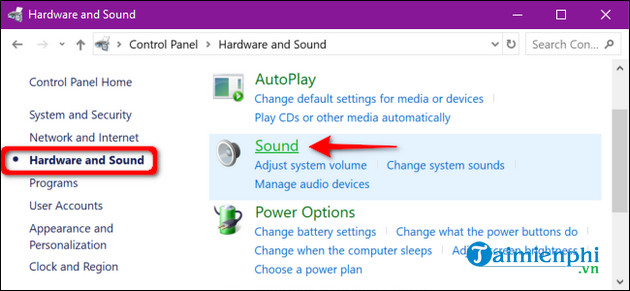
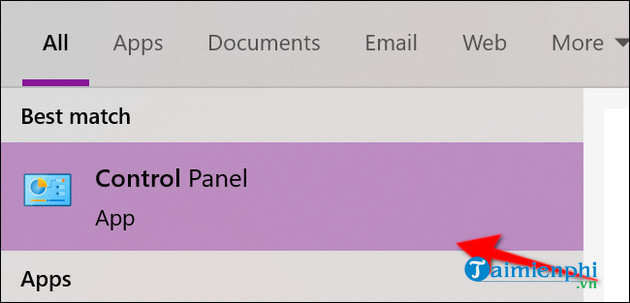
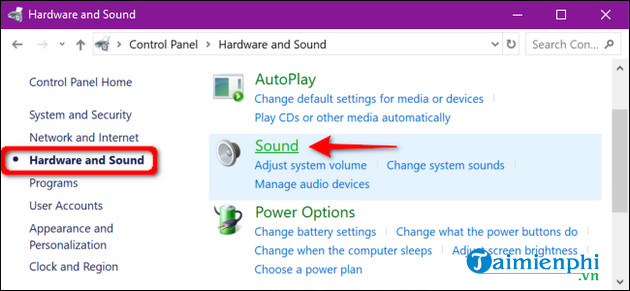
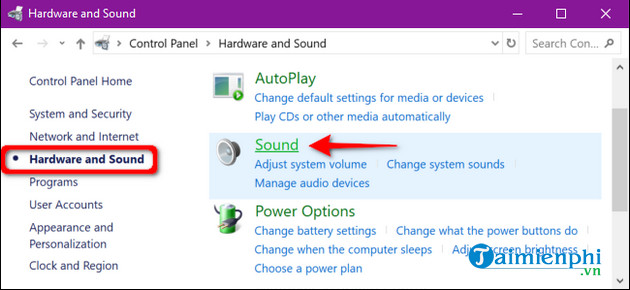
Check the audio device via Control Panel: You enter the keyword Control Panel in the search field on the toolbar and select Control Panel from the search results. Next, select Hardware and Sound > Sound.

fix sound errors on Windows 10

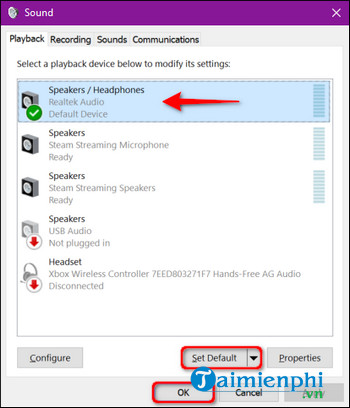
In the Sound window, set your audio device as the default device by clicking on it and pressing the Set Default button. Finally, click OK to save changes.

fix sound errors on Windows 10


3. Run The Troubleshooter

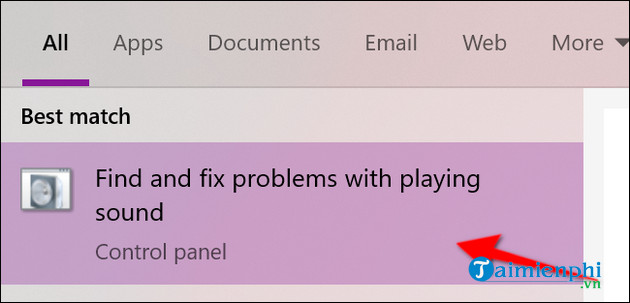
Windows 10 includes a built-in troubleshooter that scans the system and provides a possible fix. Enter the keyword Audio in the search field on the taskbar and click Find and Fix Problems with Playing Sound from the search results to open the troubleshooter in the Control Panel.

fix sound errors on Windows 10

You can also access some troubleshooters by going to Start > Settings > System > Sound > Troubleshoot.
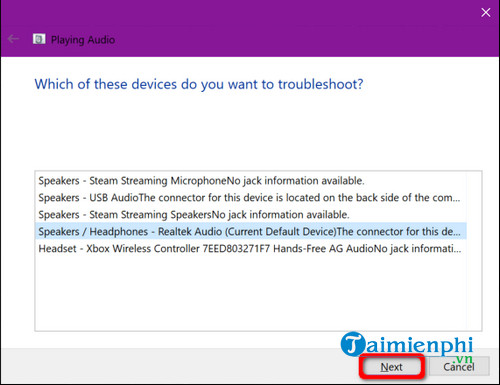
After the troubleshooter scans the audio devices, select the device that needs to be processed and click the Next button.
fix sound errors on Windows 10

Windows 10 scans for problems. You follow any instructions available to resolve the audio loss error on the computer.


4. Restart The Audio Device

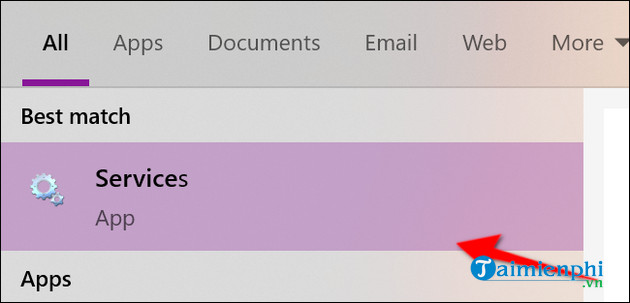
Enter the keyword Services in the search field on the taskbar and select Services from the search results.

fix sound errors on Windows 10

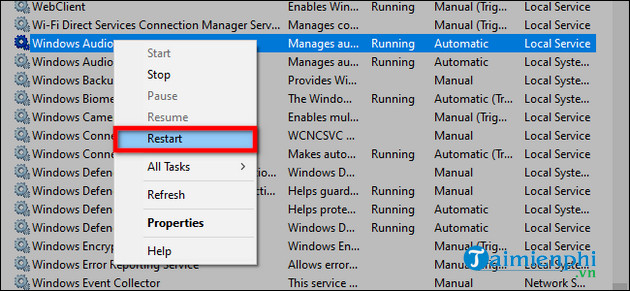
In the Services window, you will need to restart the following 3 services:
- Remote Procedure Call (RPC)
- Windows Audio- Windows Audio
Endpoint Builder

For each service, you click to select, right-click to open the service's menu, and then select the Restart option. If the Restart button is grayed out, replace it with the Refresh button.

fix sound errors on Windows 10


5. Turn Off Audio Enhancements

These "enhancements" are provided by audio hardware manufacturers and Microsoft to provide the best experience possible. However, they can be the cause of the problem.

You type Control Panel in the search field on the taskbar and select Control Panel from the search results.

fix sound errors on Windows 10

Select Hardware and Sound from the main Control Panel menu and then Sound.

fix sound errors on Windows 10

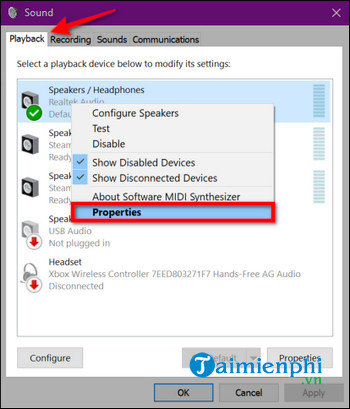
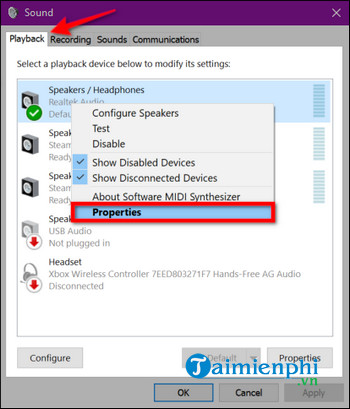
Next, select the audio device listed under the Playback tab and right-click on it to open the menu. Then, select Properties.

fix sound errors on Windows 10

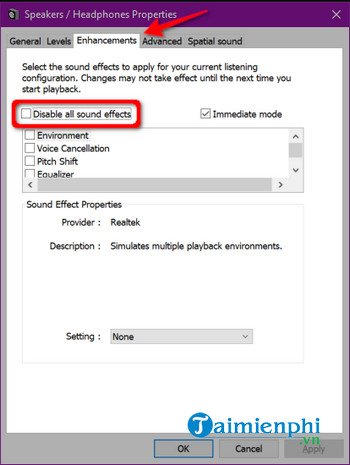
In the Speakers / Headphones Properties window that opens, click on the Enhancements tab, select the Disable All Sound Effects or Disable All Enhancements option. Click the OK button to confirm the changes.

fix sound errors on Windows 10

If that doesn't work, you probably didn't choose the right audio device as the default. Follow the steps in Check your audio device through the Control Panel to set your default audio device. If the loss of sound persists, proceed to the next step.


6. Change Audio Format

The current audio format may not work correctly with your computer's hardware. In this case, open Control Panel, select Hardware, and Sound > Sound.

fix sound errors on Windows 10

Next, click on the audio device listed in the Playback tab, right-click on it, and select Properties.

fix sound errors on Windows 10

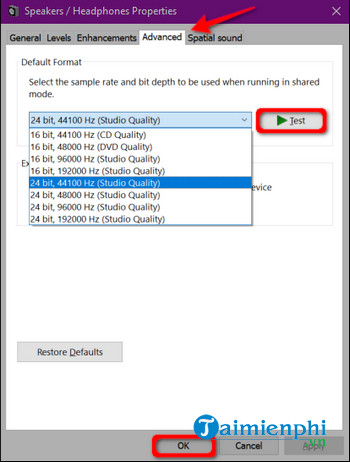
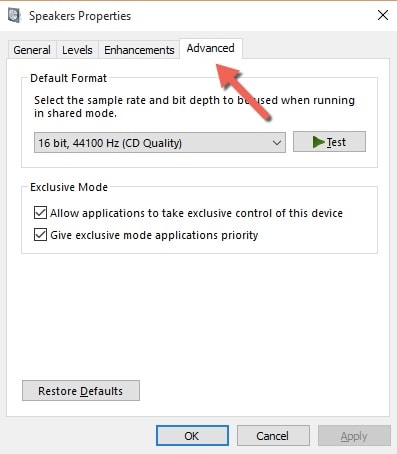
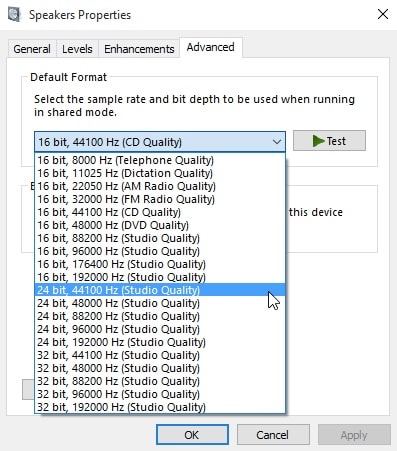
In the Speakers/Headphones Properties window, select the Advanced tab. In the Default Format drop-down menu, select a different format and click the Test button to see if the selected format works. If yes, click the Apply button > OK to save changes.

fix sound errors on Windows 10

One of the most common problems on Windows 10 is sound loss. Therefore, if you are experiencing sound loss issues on Windows 10, then you are not alone. It's important that audio errors on Windows 10 can be fixed quite easily, and here are some ways that you can apply. You don't necessarily have to try all methods, but go from basic to advanced.


                    Read More:  How To Fix Windows 10 Sound Not Working


Fix Windows 10 Audio Driver Error

Windows 10 sound not working? Is your computer's speakers not working and you are unable to hear the audio? If so, Windows 10 audio driver error is likely to be the problem. In this article, we will explain how to fix this error using simple steps.

The most common causes of Windows 10 audio driver error are:

1) The device driver for your sound card is outdated or not compatible with Windows 10.

2) The default audio drivers installed on your system may be conflicting with other drivers.

3) Your sound card might have gone corrupt and needs repairing.

Windows 10 has a built-in audio driver, but sometimes it can stop working.

There are several reasons why this could happen. If your computer is freezing up or crashing, try restarting your computer and see if that fixes the issue. If it doesn't, try updating your drivers to make sure they're up-to-date.

If you have headphones plugged in, try unplugging them and plugging them back in. If that doesn't work, check out our article on how to troubleshoot headphone problems in Windows 10.

If you're experiencing audio issues with your computer, you may be encountering an issue with the Windows 10 Audio Driver. Here are some things to try:

1. Make sure you have the latest version of the driver installed on your computer.

2. Check for any updates for your audio driver software and install them if there are any available.

3. If you are using headphones or earbuds, make sure they are connected properly and working properly before continuing with step 4 below.

4. Click Start > Settings > System > Hardware & Sound > Device Manager (or Devices and Printers under Windows 8), and make sure that there is a yellow exclamation mark next to "Sound, video, and game ports", as well as one next to "Other devices". If there isn't an exclamation mark next to either of these items, this means that those ports cannot be used by Windows 10 because they are not supported by it (for example: S/PDIF Digital Audio Out). If this is the case, try connecting your speakers instead or using another port on your motherboard/PC

Fix Windows 10 Audio Driver Error

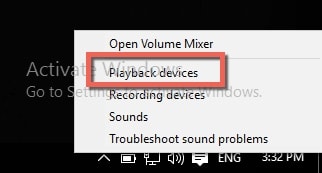
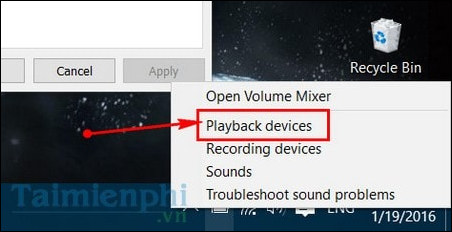
Step 1: First, right-click on the Sound icon and then select Playback devices on Windows 10.

Fix Windows 10 Audio Driver Error

Step 2: Next select your current device.

Fix Windows 10 Audio Driver Error

Step 3 : In this step you move to Properties and click on the Advanced option.

Fix Windows 10 Audio Driver Error

Step 4: Finally, you choose a lower or higher bitrate, such as 24 bit / 44100 Hz or 24 bit / 192000Hz depending on the device you are using.

Fix Windows 10 Audio Driver Error

That's how to fix the sound on Windows 10. In case you apply the above method and do not fix the sound error, try to reinstall the driver on your computer. 

                      Read More: 3 Simple Ways To Take Screenshots Windows 10

After fixing the sound error on Windows 10, you just need to plug in the headset to listen to music, There are many cases when plugging in the headset will be shy, noisy, and the music is not clear, you should carefully check the company to buy new headphones, because there are many How to fix the error of the headset is simple and very effective.

How To Fix Windows 10 Sound Not Working

How To Fix Windows 10 Sound Not Working

Are you frustrated with your Windows 10 sound not working? Don't worry, you're not alone. Many users have experienced this issue, but the good news is that there are solutions to fix it.

One common problem is when there is no sound on Windows 10. This can be caused by various reasons, such as outdated or incompatible audio drivers, incorrect audio settings, or even hardware issues.

If you're facing the issue of headphones not being detected in Windows 10, it could be due to a faulty audio jack or incorrect headphone settings.

To resolve these issues and get your sound working again on Windows 10, we have compiled some effective troubleshooting steps for you to follow. From updating drivers to checking audio settings and troubleshooting hardware problems, we will guide you through the process step by step.

By following our comprehensive guide on how to fix Windows 10 sound not working, you'll be able to enjoy your favorite music and videos without any interruptions. So let's dive in and get your audio back up and running on your computer!

Having a Windows 10 sound not working will make it impossible for users to listen to music and chat online with people as usual. To fix it, please see the article on how to fix Windows 10 sound not working below.

You are watching a video or listening to a certain song on the network, then suddenly it is interrupted and cannot be heard anymore, and sometimes right from the start you can't hear the sound on the device, that may be your fault. accidentally enabled Audio Enhancements. This is a feature that helps users optimize the sound on the computer, but it is also the culprit that causes the sound to be lost on Windows 10.

Windows 10 Sound Not Working

Previously, 5startpc guided you through an article to fix Windows 10 audio driver error and fix sound loss in Windows 11 readers can read through.


                     Read More: How To Fix Windows 11 Sound Not Working


Instructions To 
Fix Windows 10 Sound Not Working

Instructions on how to fix audio errors on Windows 10 due to Audio Enhancements

Step 1: Click on the Sound icon and select Playback Devices on the Taskbar.

How to fix sound problem in windows 10

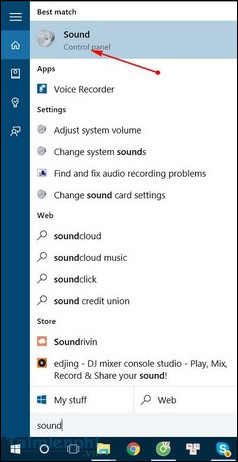
Or open StartMenu type Sound to search.

how to fix sound problem in windows 10

Step 2: Click on the active audio driver icon and select Properties.

how to fix sound problem in windows 10

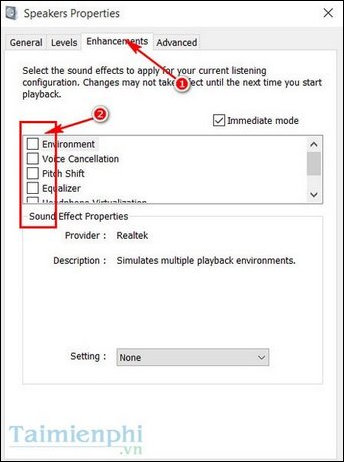
Step 3: Go to the Enhancements section, check all the lines then OK and restart the machine.

fix sound problem in windows 10

https://thuthuat.taimienphi.vn/khac-phuc-loi-mat-am-thanh-trong-windows-10-5397n.aspx
After rebooting, your sound should work normally again. Hope the article is helpful to you. There are also 4 errors on Windows you often encounter that you can refer to through how to fix. If you use Mac OSX and also get the same error, please refer to How to fix sound loss on Mac here.

                           Read more: 3 Simple Ways To Take Screenshots Windows 10

Tag: Windows 10 sound not working, audio not working Windows 10, no sound on computer Windows 10, speakers not working Windows 10, fix sound problems in Windows 10, no audio Windows 10, headphones not working Windows 10,  audio services not responding,  headphones not detected windows 10, the audio service is not running, no sound windows 10,